Drawing With Atmosphere and Mood - The Definitive Guide (2026)
We all have our favourite drawings or paintings by master craftsmen, that go beyond just amazing drawing skills by creating a unique atmosphere or mood in their work.
The question is…
How did they design this mood?
And what tools and techniques can you use, to create the same in your drawings?
In this article you’ll learn 5 techniques to create atmosphere/mood/vibe, whatever you wanna call it, in your drawings.
We’ll take a look at two of the greatest painters in history, and what tools they used to create a unique atmosphere in their paintings:
Renoir and Sargent.
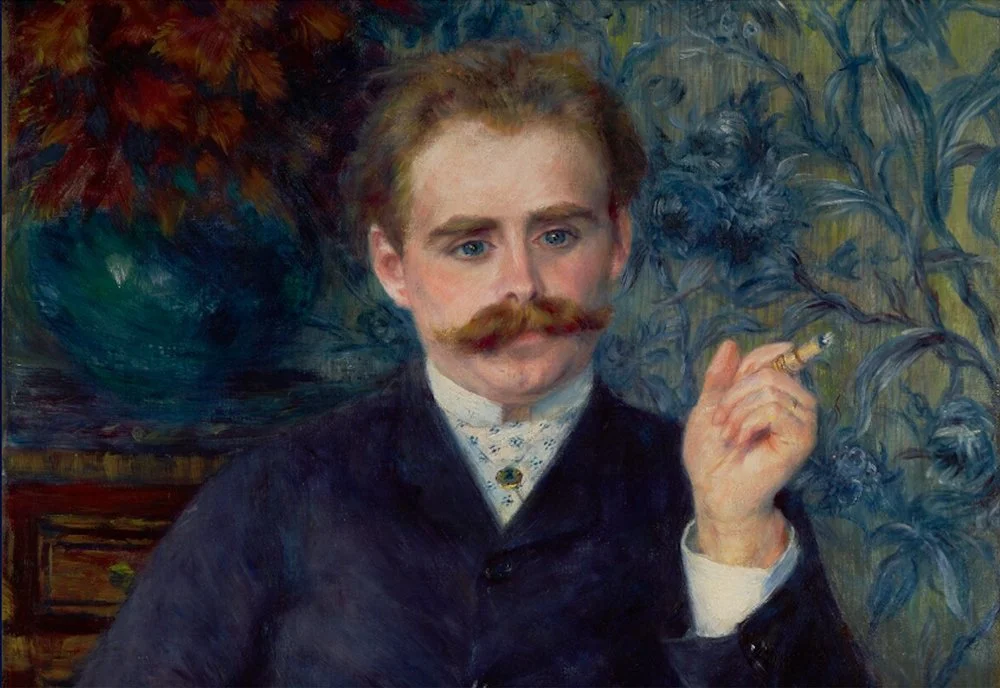
Albert Cahen d’Anvers by Renoir
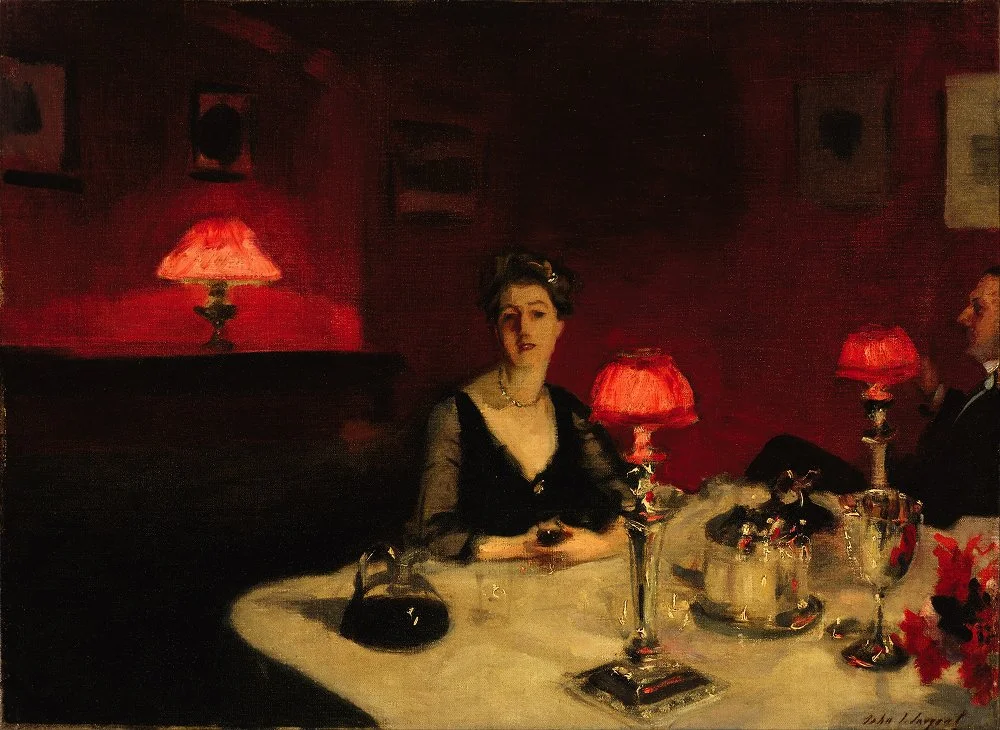
A Dinner Table At Night by Sargent
I was lucky to see Renoir’s painting in the Getty in L.A., and Sargent’s painting in Paris at the Musée d’Orsay. Both paintings have a very unique feel to them, so I wanted write up my thoughts and studies since a while.
Let’s get into it!
Atmosphere Technique 1: Arrange objects of varying sizes around the portrait to create depth.
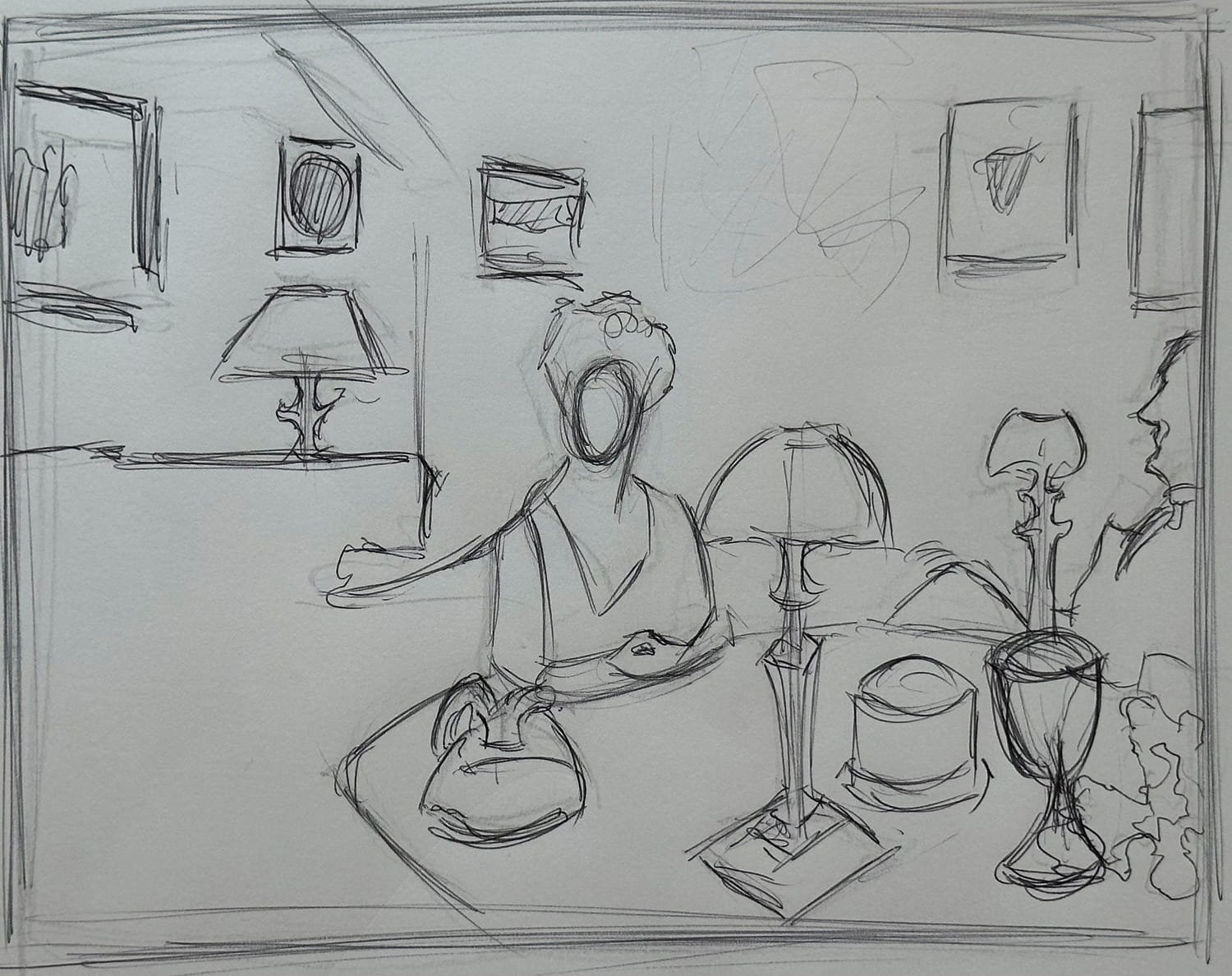
Big means close, small means far, especially when put next to each other.
On the most basic level, both Sargent and Renoir placed objects of varying sizes around the portraits focal point.
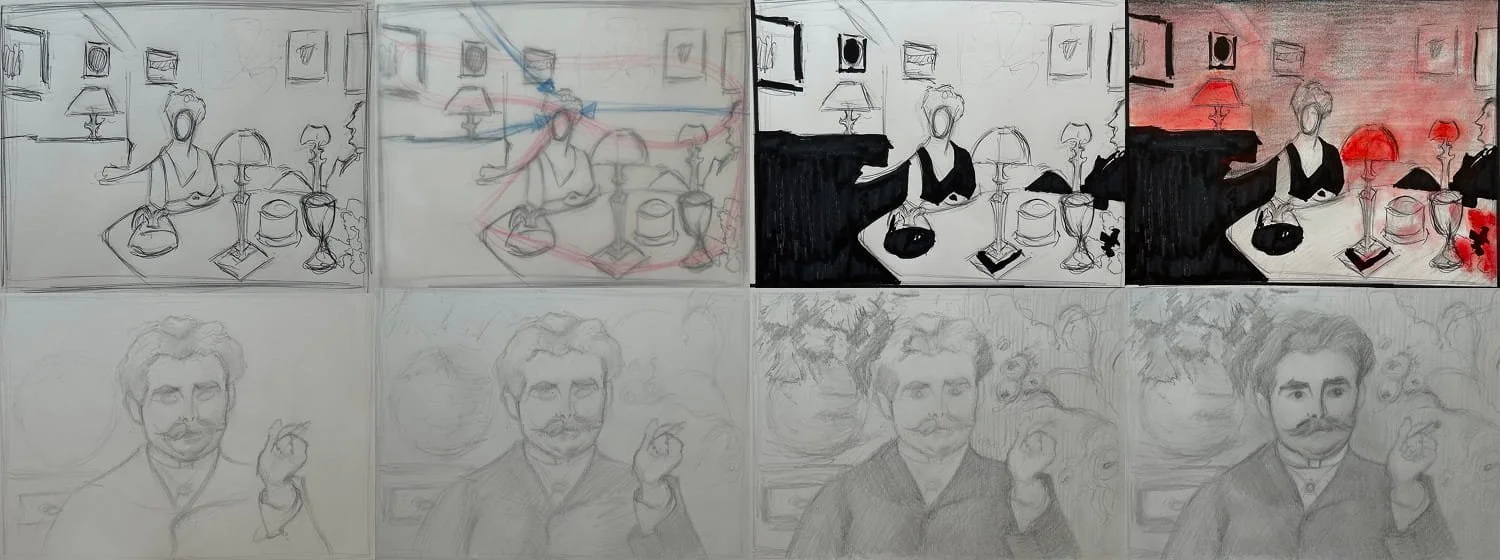
In Sargent’s painting this is particularly obvious. Notice how in the pen study above, we got picture frames, some small some big, all indicating perspective. In the mid- and foreground the lamps, glasses and vases enhance this effect.
The human mind can’t help but relate the size of an object to the distance it’s away from us, especially if there are several objects around to compare. Bigger means closer, smaller means further away.
You can start using size relationships today in your drawings without any deep knowledge of perspective. This little trick creates the most basic sense of atmosphere, on which you can build the next techniques.
Atmosphere Technique 2: Use textural contrast.
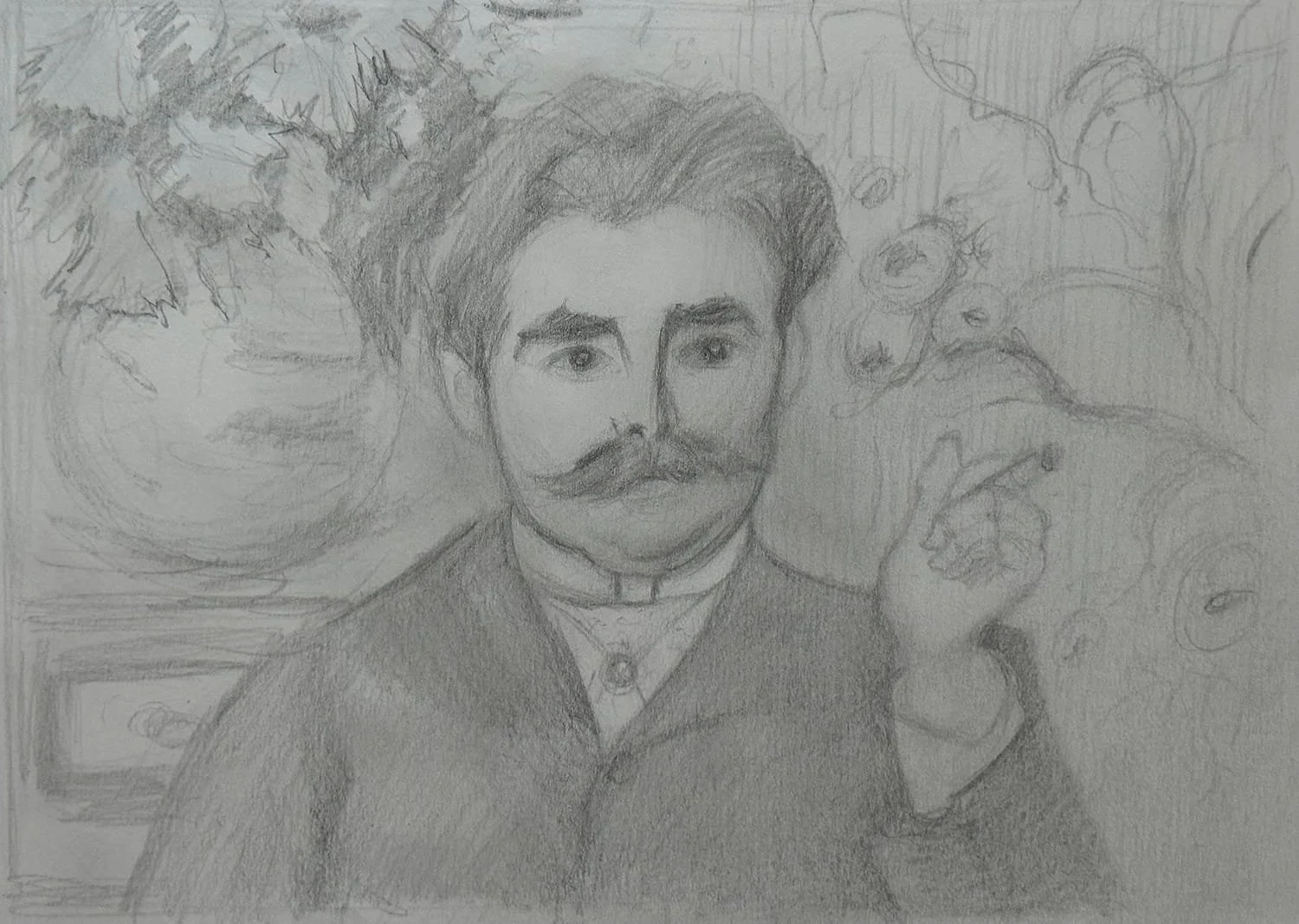
Surrounding a smooth surface with rough textures makes it feel even more smooth. The magic of contrast.
Check out the graphite study of Renoir’s painting above.
The focal point of the portrait is the face, and skin always has a smooth surface. To enhance this smoothness, Renoir purposefully used textures in the background that are the opposite of smooth:
Curly, windy orchid like textures on the right, erratic and pointy leaf like textures on the left.
This contrast in textures makes the skin feel even more silky.
Contrast is a technique you can use to enhance any effect.
Want to make something feel even more blue? Surround it with orange.
Want to make something feel even more light? Surround it with black.
Want something to feel smooth and fluid? Surround it with erratic, sharp, interrupted marks.
The applications of contrast are endless. It’s a staple realism technique used by the greats, so make sure to use it in your drawings as well!
Atmosphere Technique 3: Use objects that have associative meaning.
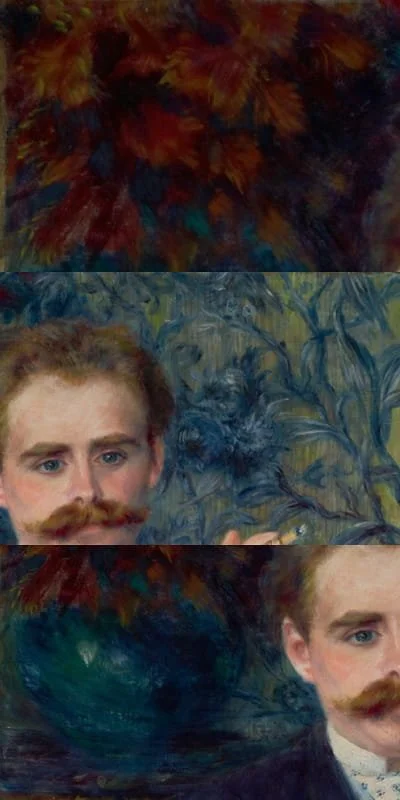
Why did Renoir chose these visual patterns around the portrait’s head?
In Renoir’s portrait the background is quite unique. The right side has blue plants that have an orchid type feel to them, with green vertical lines in between.
On the upper left is a deep, dark red leaf collection, similar to an acorn tree.
Right below is a big, deep blue sphere that mimics the color of the eyes of the portrait. The eyes are the window to the soul, and it does feel like the window to the soul is positioned right next to the portraits head in the form of this blue sphere.
All these objects, even if they feel abstract, create associations in our mind, which create mystical atmosphere. It’s as if Renoir tried to pull out the inner world of the sitter, a famous music composer, into the space surrounding the head.
The objects Renoir arranges around the portrait create the feeling that we get a glimpse into his creative mind, as he smokes his cigarette and has a sublime moment of genius.
Notice how in the midst of this mystical arrangement, the head and eyes connect to the hand and cigarette in one straight diagonal line, creating the impression of a sharp mind having a thought piercing through the mystical atmosphere.
Atmosphere Technique 4: Connect the background to the portraits mind through rhythms.
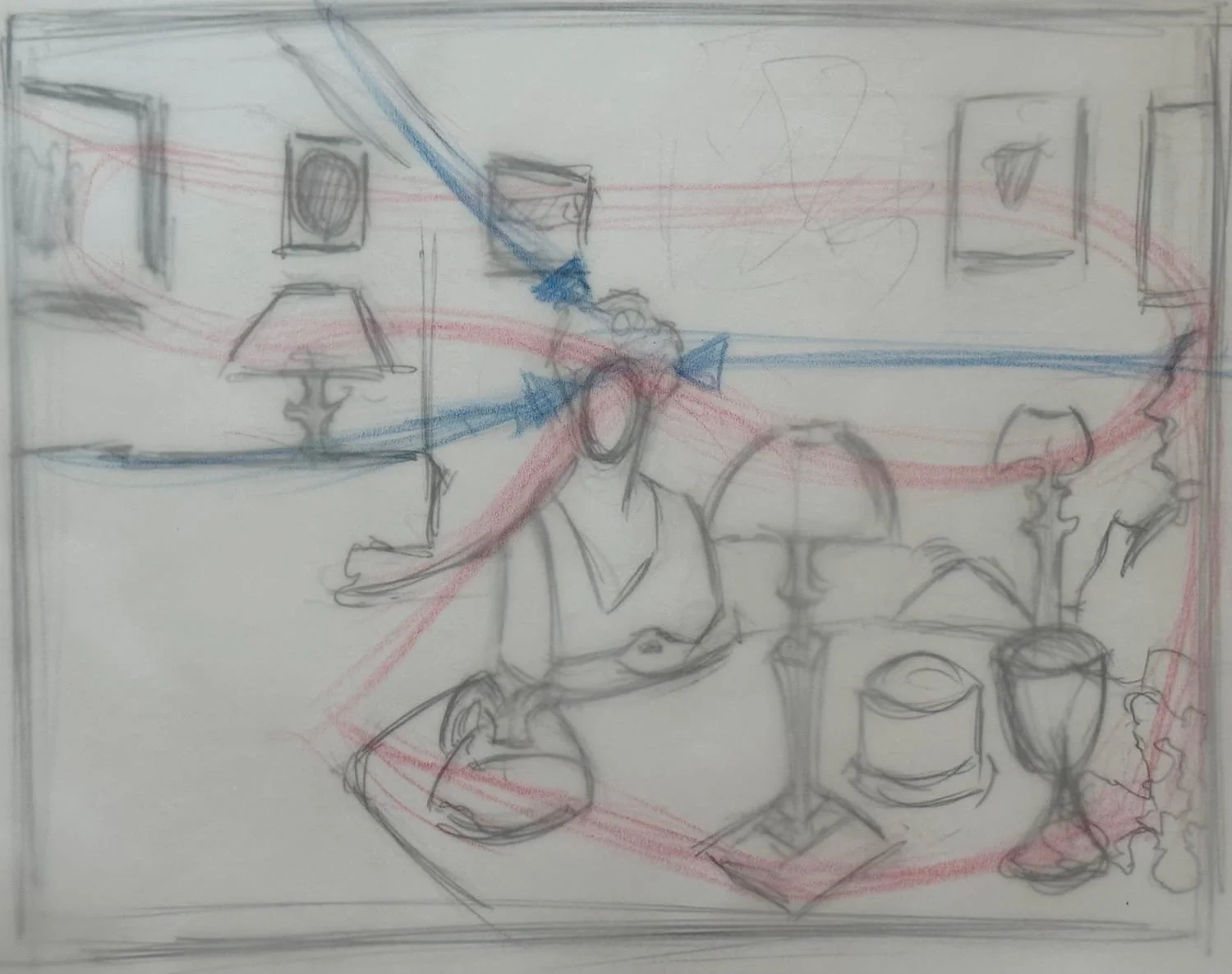
Invisible rhythms create atmosphere.
Rhythms are invisible lines that connect visual elements in a painting.
When you look at Sargent’s painting you can see that the red lanterns, the picture frames and the glasses all connect to the head of the sitter through sweeping rhythm lines.
While these rythms are not explicitly drawn with a line, you feel them when looking at the picture, and it’s the direct result of Sargent’s conscious design of these rhythms.
The viewer feels that the lanterns, the background, the table, somehow are all connected to the woman’s mind, creating strong visual impact in the focal point of the painting. Yet the linear rhythm that creates this impact is hidden beneath the beautiful rendering.
The next time you draw try apply this technique in your drawing. Take a moment to think before you start what rhythms you want to build the image around.
And if you want to dive even deeper, check out my Definitive Guide To Drawing With Rhythm.
Atmosphere Technique 5: Chose a color key that enhances the mood.

The color key in a painting is the one color that the whole painting is built around. Even if there are a few colors, often there is a key that all other colors harmonize with or are built around.
This color key has a big effect on the atmosphere of the painting.
In Renoir’s painting, the color key is a deep blue, which enhances the mystical and creative atmosphere around the composers creative process.
In Sargent’s painting the orange/red light from the lanterns, combined with the dark value pattern, creates the unique dinner atmosphere in the painting.
You’ll find most master paintings use one very unique color, that the whole painting is built around. Next time you paint, be conscious of how this impacts the atmosphere you want to create in your image.
Concluding thoughts
That’s it, I hoped you enjoyed those tips.
I recommend you look at a few more master paintings, as you’ll find that those techniques are used again and again by master picture makers to create atmosphere and mood in their work…
The next time you draw ask yourself:
What atmosphere or mood do you want to create?
What objects with associate meaning can you arrange around the subject?
How can you connect them to the subjects mind, and to the whole composition?
How can you vary their size to enhance the feeling of depth?
How can you create a contrast of textures to enhance the focal point’s feel?
What color key would enhance this feeling?
Now, if you liked this article and want to dive deeper into some of the foundational drawing skills mentioned, check out Foundations of Realism below.
Until next time!
Felix