Unlock Realistic Drawing
Never get “stuck” in a drawing again, make more progress in 20 minutes than most people get in 2 hours of random practice and finally have fun drawing like a pro!
In this ultimate drawing course you learn the 7 foundational skills of realistic drawing in a systematic step-by-step way taking you from beginner to advanced.
No more confusion. Just results.
Taught by: Felix Schreiter

Loved it! It was really thought out and taught so much I didn't know. It has helped immensely on my realism art.
It was great, because it was the whole package, not only some small part of all the skills necessary. Great resource for beginners, or people who have tried painting/drawing but are lost on how to get better.
This course is very inspiring because it offers progressive, step-by-step instruction. It is easy for beginners and also challenging for intermediate artists. I actually got better and improved my portrait and figure drawing skills by taking this course. Thanks a million!
My student Jenn saw a marked improvement in her drawing in just a few days after years of getting stuck!
I've dabbled in traditional and digital art off and on since I was a kid. I've always had trouble with getting proportions right and adding value. Actually, I had a lot of trouble getting particularly good at any part of art. I would progress to a point, and it's like I couldn't see what was wrong with my drawing.
This course has it all — from the barebones basics to advanced lessons, and even tips on how to make progress after the course. There is a nice progression through the lessons. It's not like, "Okay, yesterday I drew a cube... How'd we get to drawing full figures?!" He has a nice pace about each lesson and describes what he's doing in detail.
I was already quite familiar with drawing implements (pencils, charcoal, etc.) and the different types of paper, but I learned even more about them, and why some techniques work with some mediums but not others. He teaches the why and the how behind the methods.
Even within a few days, I had a marked improvement in my drawing. You can tell Felix has put a lot of thought, time, and dedication into this course, and he puts the same amount of dedication into the students. He seems to really enjoy seeing your progress and gives tips and advice in a thoughtful way.

Do you dream of...
...drawing anything you see with realism, design and beauty?
...filling sketchbooks with your original, expressive and realistic drawings?
...having a drawing skillset that gives you true freedom?

But in reality…
…drawing feels confusing, hard and like a magical skill only some are born with?
…you get stuck in the middle of a drawing and don’t know how to proceed?
…one day your draw great, the next day you draw badly?
“Just observe” isn’t enough.
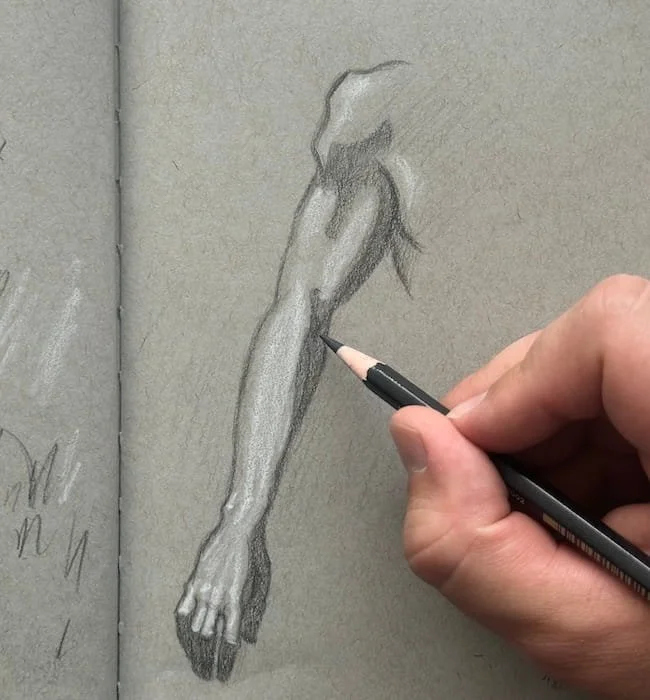
I once went to a French Academy in Paris for a life drawing class, and the only advice the teacher gave was: “Just observe.”
Strangely, a lot of drawing advice sounds like this:
“Just observe carefully.”
“Draw what you see.”
“Practice every day.”
And technically, none of that is wrong.
But imagine if we taught every other skill this way.
Imagine your first tennis lesson was: "Just watch the ball and hit it."
No grip, no footwork, no stance, no swing — that’s what most drawing instruction does.
You don’t accept lazy instruction like this in any other part of your life, so why accept it in drawing?
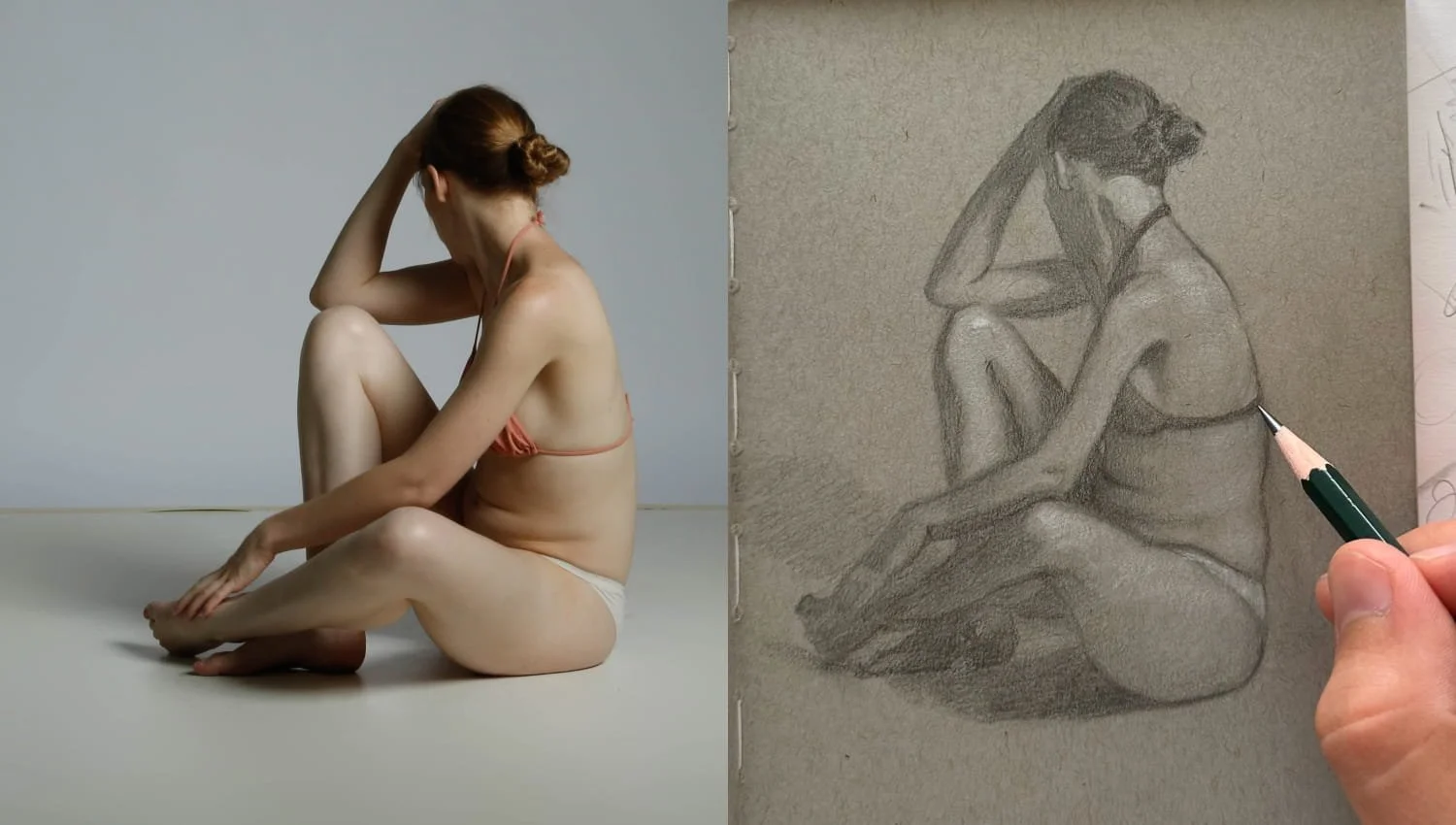
Drawing isn’t fundamentally different.
It’s a complex skill made up of smaller skills.
And if you don’t understand those smaller skills, “just observe and practice” means you will make you progress at a snails pace.
Compared to how fast you could learn drawing with the systematic approach taught in this course.

Hi I’m Felix,
and before I tell you how this course teaches drawing differently, I want to tell you my story.
I started drawing, maybe like you, as a kid. But I didn’t “get into it” until maybe 12 or 14. Something like that.
At that age I remember my mum showed me how to draw a little 3D cube. Somehow this cube made me realize I can draw in three dimensions and it intrigued me to learn realistic drawing.
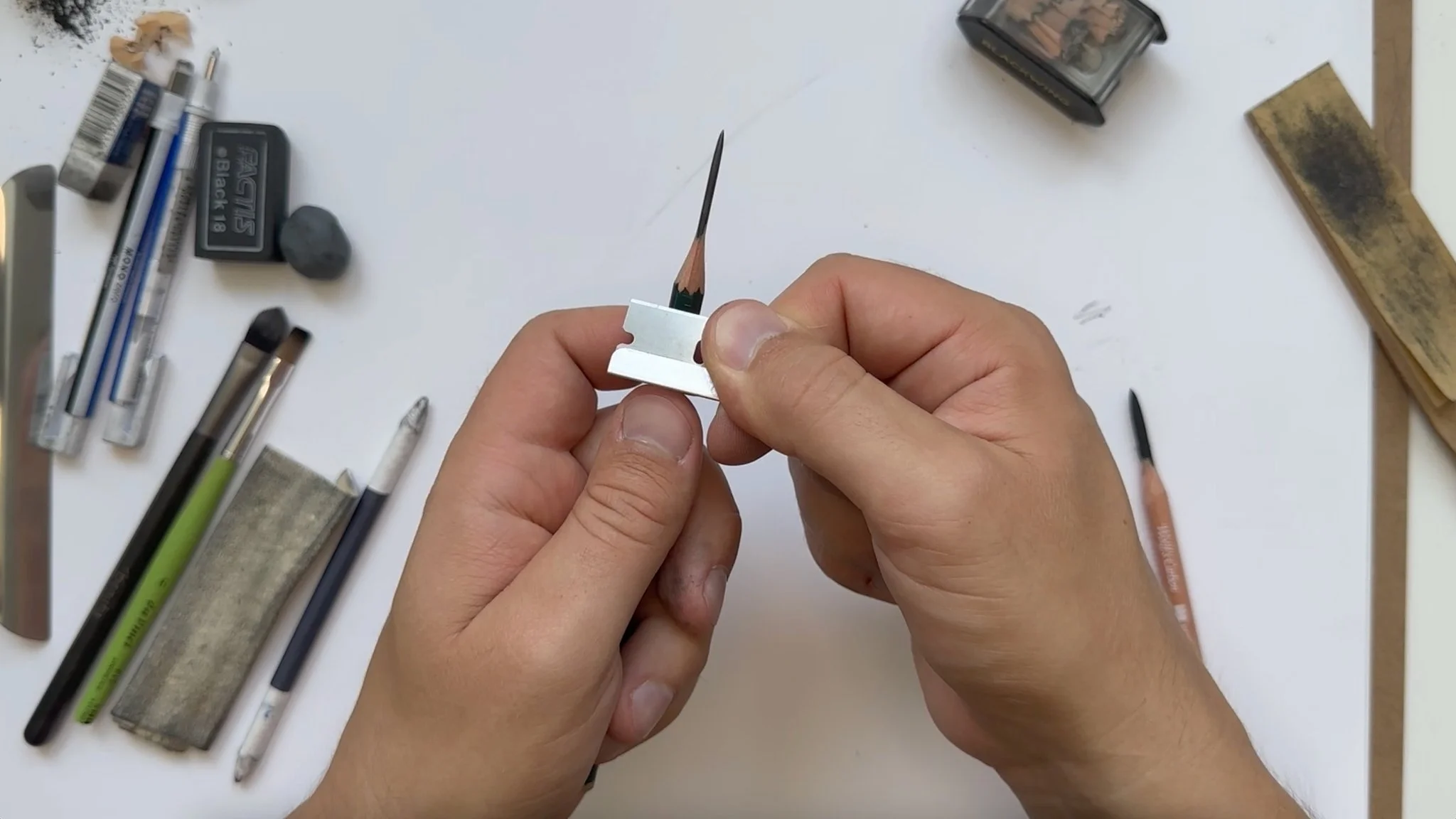
At the time the internet wasn’t that popular yet (I’m 32), so all I could find where a few subpar drawing books. I’d copy some stuff, and basically have zero idea what I was doing.
One day I stumbled across a book called “Drawing on the Right Side of the Brain", by Betty Edwards.
This book was both a game changer, and at the same time resulted in my biggest drawing plateau ever…
It taught me the famous “Just observe” approach. Observe lines, observe angles, observe values. And match them.
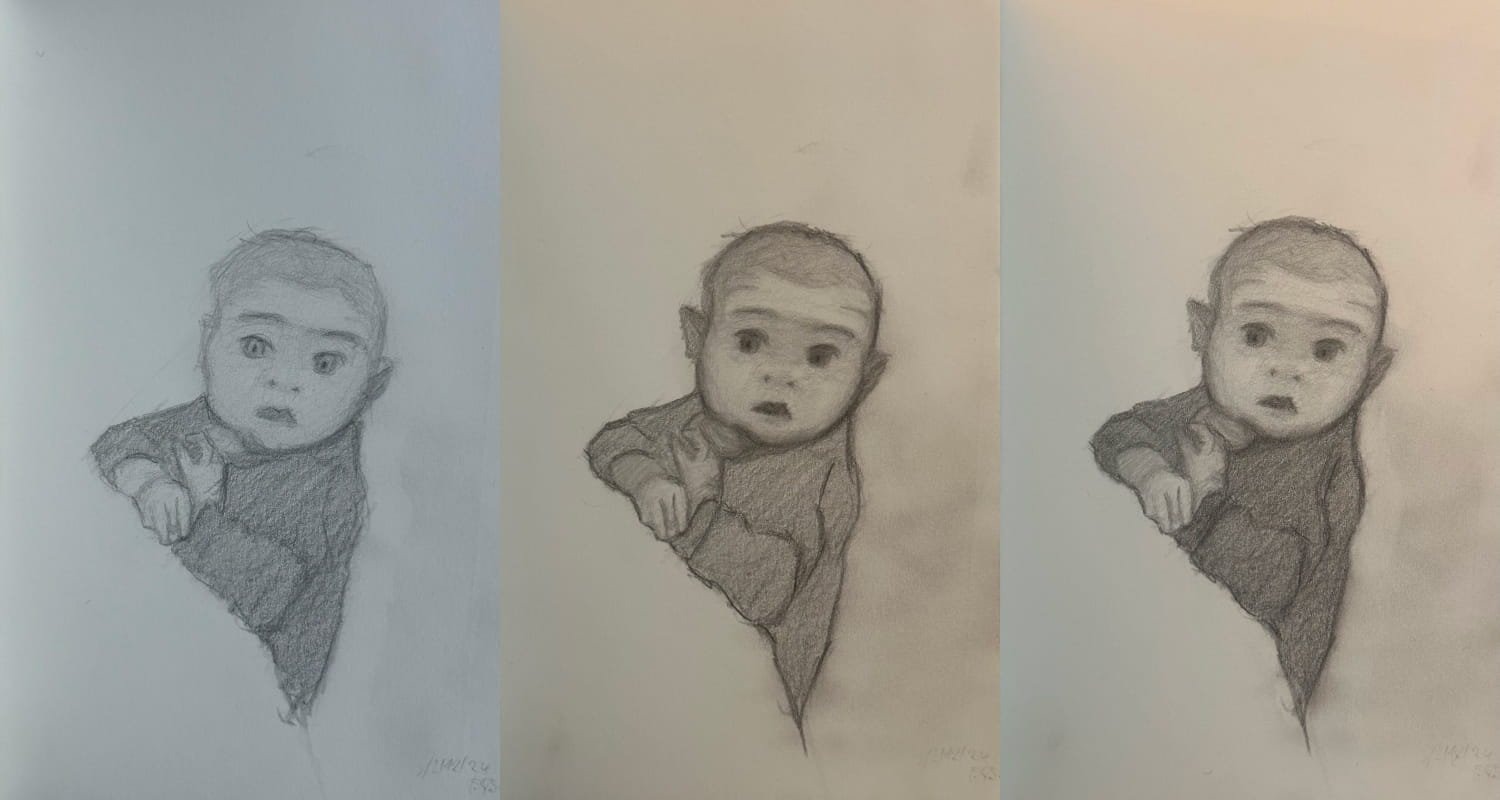
I loved training my “vision” with that approach, and for the first time I managed to draw a super realistic figure drawing and portrait. I literally just meticulously copied the reference, erased anything that was wrong, step by step. It took hours, but it worked.
I was so satisfied after finally having achieved the realistic drawing I always wanted to do. “Now I’m skilled.” - I thought.
But then an emptiness started to replace the satisfaction I had felt.
Doubts started to creep into my head:
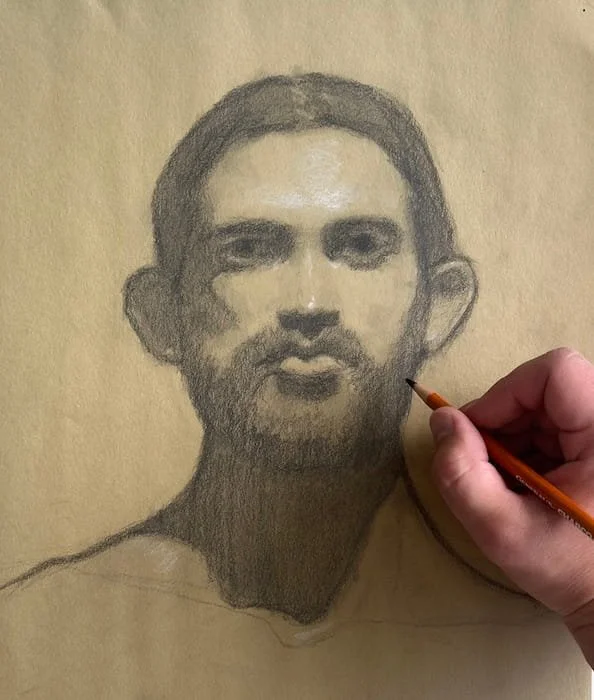
“If drawing is simply copying what you see, meticulously, correcting anything wrong… then isn’t that like the most boring, unnecessary thing to do in the whole world?!”
Yes the drawing looked fine… but the process was boring. I literally just copied.
After that experience I gave up on drawing for many years. Here and there I’d play a bit with it.
But I always felt like “I know what drawing is and it’s boring. It’s not as exciting as I hoped it to be”.
What a shame, as I was completely unaware of a whole world of drawing instruction that makes drawing the exact opposite of boring.
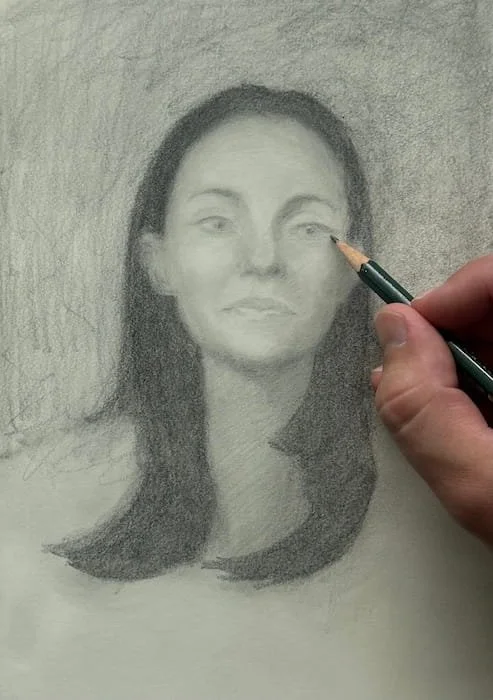
In my late twenties, somehow I found a guy called “Chris Legaspi.” You might know him as I offer some of his courses on this site.
He introduced me to concepts in drawing I had NEVER heard of:
Mark making
Master studies
Shape Design
Composition
Shading techniques
Planes
Constructions
Gesture
Layering
and many, many more.
Each concept was like discovering a fundamental part of the visual world I had been completely unaware of.
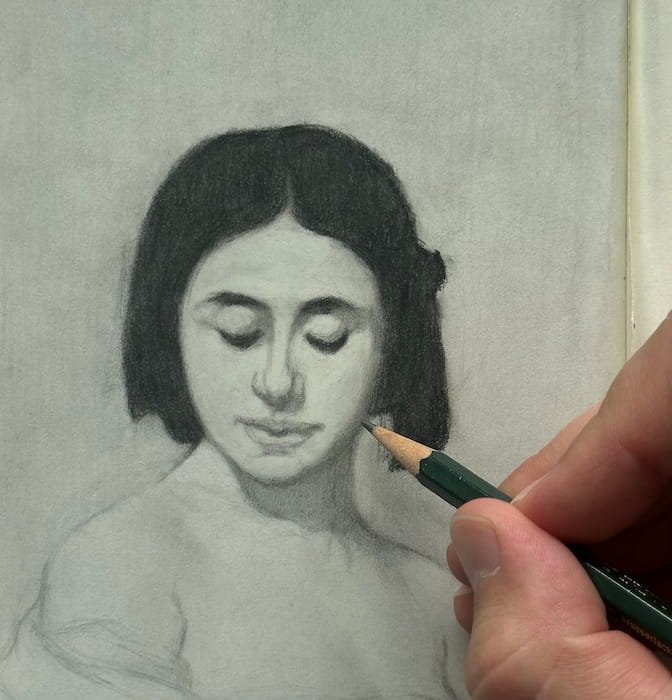
Yes observing, training your vision and measuring is one of those skills, so Betty Edwards did teach something valuable.
But it’s maybe 5% of all drawing concepts you need (if I had to put a number on it).
Suddenly I realized:
Drawing is not different to any other skill. To get great, you need to break it down into it’s components, build a foundation, fix your weaknesses, and work on every part of your game.
Which is what you do in any other endeavour like sports, music, you name it.
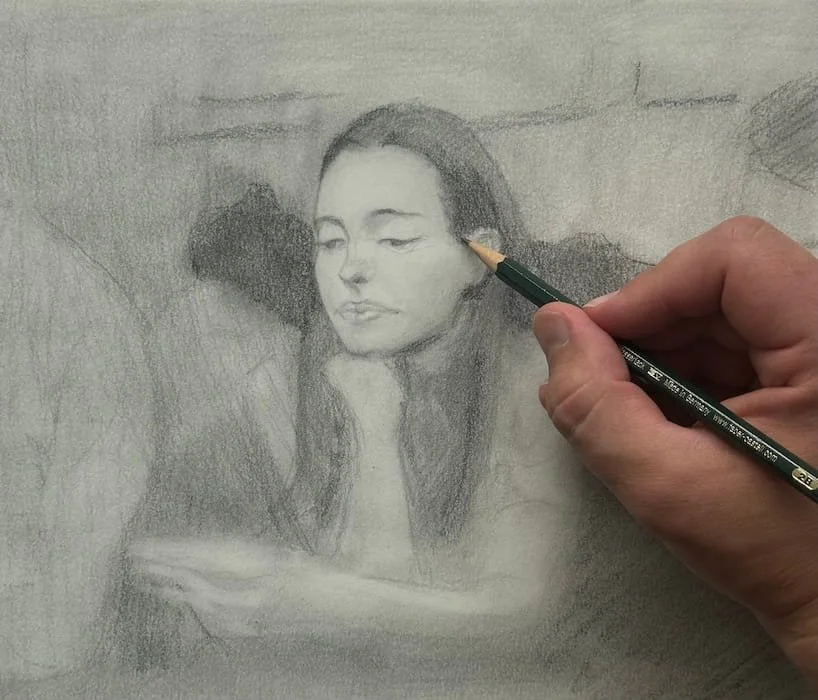
I couldn’t believe how I had wasted over a decade, when I could have gotten so much better at drawing. Thinking I had “figured it out” and it’s just a boring hobby.
More than that: All those skills Chris taught me made me realize how FUN drawing becomes when you can freely manipulate those foundational skills to get visual effects that illicit specific emotions.
The ability to control and manipulate the foundational drawing skills to get specific visual effects is called DESIGN.
And Design is FUN!
Once you can draw with Realism using the foundations, the FUN of drawing and the ART in it, comes when you can consciously control the visual variables to create the pictures you imagine. As a designer. And a picture maker.
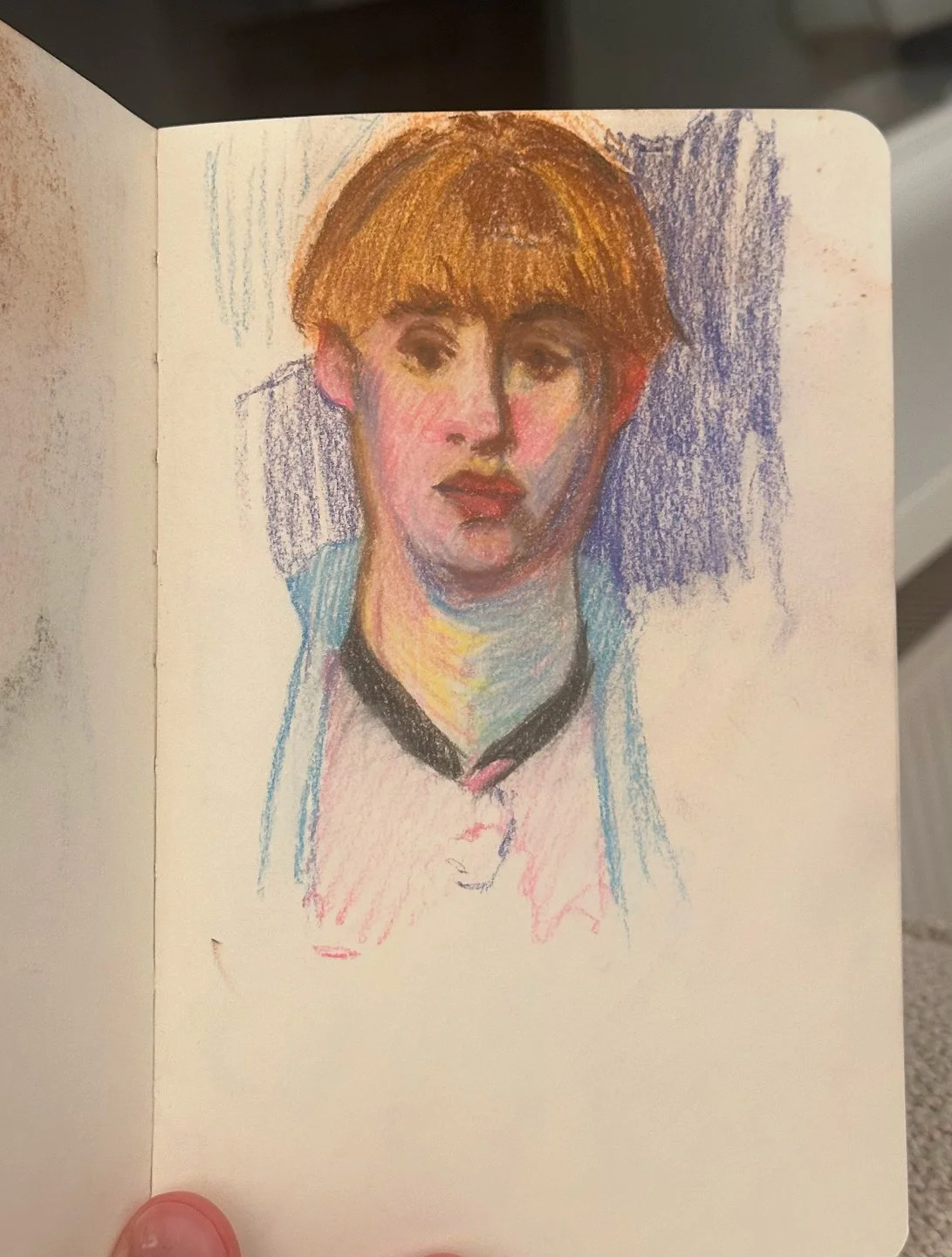
Once I had this transformational shift everything changed. I absorbed and studied from countless other teachers and methods.
Each method fit neatly into one of the foundational building blocks. They were like guides helping me fix specific parts of my drawing game.
Drawing became a fun obsession, something that pulls me in, because I want to do it, and can’t help but do.
Making it a habit, practicing several times a week, became not even a question….
Now looking back at my drawing journey, my biggest regret is that I didn’t find the drawing foundations sooner…
Introducing:
Foundations Of Realism
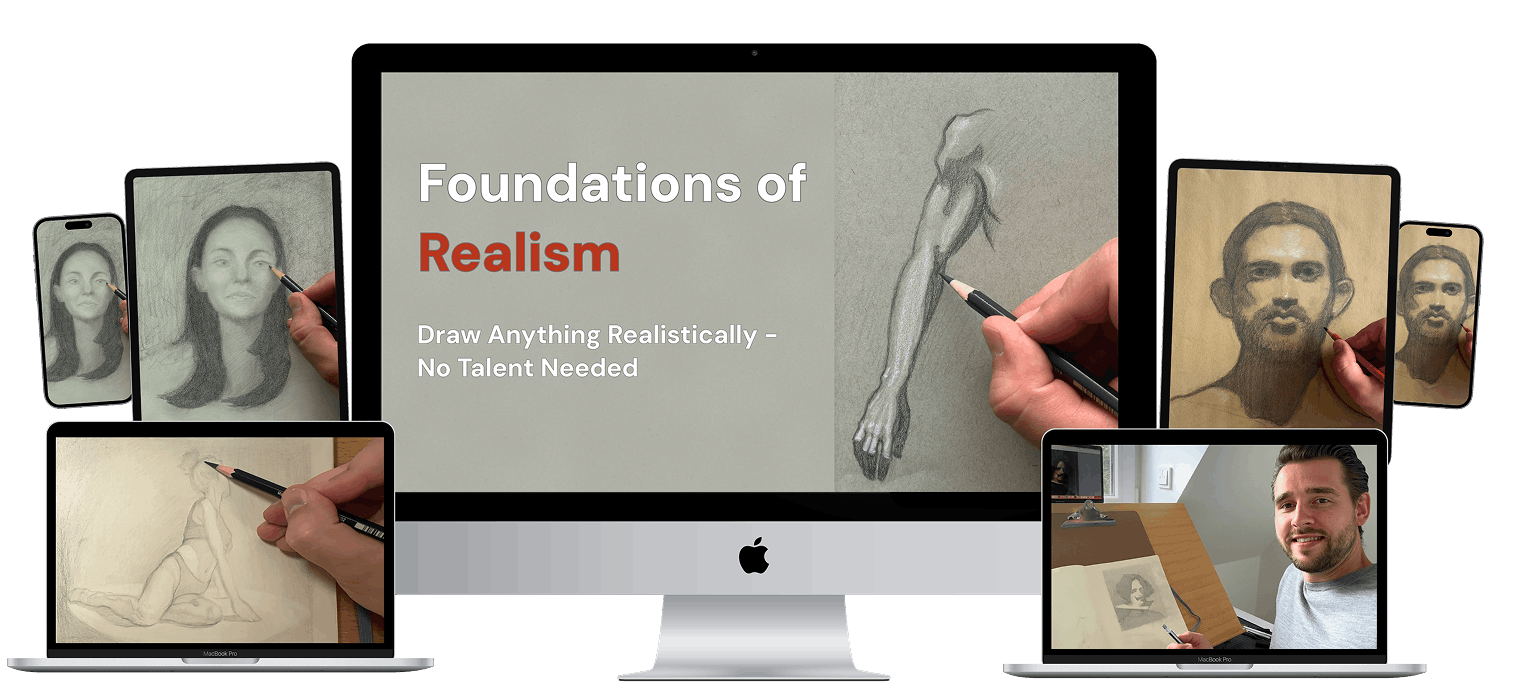
What You’ll Learn:
Diagnose your own drawings. Instead of "something feels off but I don't know what," you'll know exactly which of 7 skills is weak and how to fix it — for any drawing, forever.
Get real results in 10-20 minutes, not hours of aimless practice. Structured practice beats "just draw more" — you'll know exactly what to work on in each short session.
Never hit the "I've plateaued and lost motivation" wall. The foundations are what stop the classic burnout cycle — you're improving day by day, not spinning your wheels.
Draw anything — portraits, figures, landscapes — from one foundation. Not a course that only teaches faces or only teaches landscapes. One skillset, applied everywhere.
Develop your own style, instead of just copying references. Once you control the foundations, your natural preferences start showing up in your work — this is the "design" layer, not just realism.
Make every other drawing resource make sense. Any book, YouTuber, or course you use afterward slots into the framework instead of feeling like disconnected, contradictory advice.
Skip the decade of confusion. You get the structured path, instead of "just observe" advice that sets you back years.
Most people don't have a talent problem when it comes to drawing. They have a diagnosis problem.
They know something's off in their drawing, but not what. So they guess, fix the wrong thing, and wonder why they're not improving.
Here's what changes once you learn the 7 foundational skills of realistic drawing:
You look at any drawing — yours or anyone else's — and know exactly which skill is weak. No more "something feels off."
You get real results in 10-20 minutes, because you know exactly what to work on. No more hours of aimless practice hoping something sticks.
You stop hitting that wall where you plateau and lose motivation. You're improving session by session, not spinning your wheels.
And it's not just for faces, or just for landscapes. One skillset. Applied to anything you want to draw.
Ready to learn this unique approach to drawing?
I look forward to seeing you inside.
-Felix
Foundations of Realism
Draw Anything Realistically - No Talent Needed
- 10 hours of high-quality video instruction:
- ✓ Module 1: Materials — pick the right tools for the job
- ✓ Module 2: Linear Mark Making — draw confident, clean lines instead of shaky, uncertain ones
- ✓ Module 3: Tonal Mark Making — Learn 3 techniques that instantly level up your shading
- ✓ Module 4: Accuracy & Design — get a likeness with an intuitive and fun approach
- ✓ Module 5: Gesture — infuse your drawings with life and energy
- ✓ Module 6: Value & Edges — create atmosphere and depth in your drawings
- ✓ Module 7: Form — make anything you draw look like it comes off the page
- ⭐ Bonus #1: Figure Drawing Demo
- ⭐ Bonus #2: Portrait Drawing Demo
- ⭐ Bonus #3: Rendering With Black & White Pencil On Toned Paper Demo
- ⭐ Bonus #4: Self-Study Resource Guide
- ⭐ Bonus #5: Reference Guide & Master Reference Vault
- 📚 All Exercises & Workbooks
- ♾️ Lifetime Access to All Updates


The way I teach is very different:
No need for talent
No need for more than 20 minutes per session
No boring “just observe” advice
No overwhelm
No expensive materials
...my system is simple & works for everyone.
What Students Are Saying.
I liked the in-depth explanations of all the materials... very useful for complete beginners. I never thought of using toned paper before!
I've been enjoying the lessons on how to make your drawings pop. They've been inspiring and I've been able to get a little doodle done this week.
A lot of valuable information. My ‘aha’ moment was the use of a precision eraser pen to create the impression of light.