Stop guessing what's
wrong with your drawing
Built for people who think they can't draw.
No talent needed
No need for more than 20 minutes a session
No expensive art materials
No overwhelm
No more "just observe"
Made for self-taught artists. I am one.
Why "something feels off" never gets fixed
Realistic drawing isn't one skill. It's seven small ones working together.
When one is weak, the whole drawing feels wrong, and you can't tell which one. So you guess. You fix the wrong thing. You draw more. Nothing changes.
Here's the chart I wish someone had handed me at fourteen:
| Your drawing looks... | Missing skill | Fix it in |
|---|---|---|
| Smudged, scratchy, like you're fighting your tools | Materials | Module 1 |
| Shaky, nervous lines | Linear Mark Making | Module 2 |
| Scribbly, patchy shading | Tonal Mark Making | Module 3 |
| Close, but "doesn't look like them" | Accuracy & Design | Module 4 |
| Stiff, like a mannequin | Gesture | Module 5 |
| Flat, grey, no atmosphere | Value & Edges | Module 6 |
| Like a sticker on the page, not a solid object | Form | Module 7 |
Once you can read this chart, "something feels off" becomes "my edges are too hard." That one you can fix in a single short session.
[VISUAL: a real drawing marked up by you with 3 annotations, e.g. "Edges: too hard", "Form: flat"]
Never get “stuck” in a drawing again
| Your drawing looks... | Missing skill | Fix it in |
|---|---|---|
| Smudged, scratchy, like you're fighting your tools | Materials | Module 1 |
| Shaky, nervous lines | Linear Mark Making | Module 2 |
| Scribbly, patchy shading | Tonal Mark Making | Module 3 |
| Close, but "doesn't look like them" | Accuracy & Design | Module 4 |
| Stiff, like a mannequin | Gesture | Module 5 |
| Flat, grey, no atmosphere | Value & Edges | Module 6 |
| Like a sticker on the page, not a solid object | Form | Module 7 |
Introducing:
Foundations Of Realism
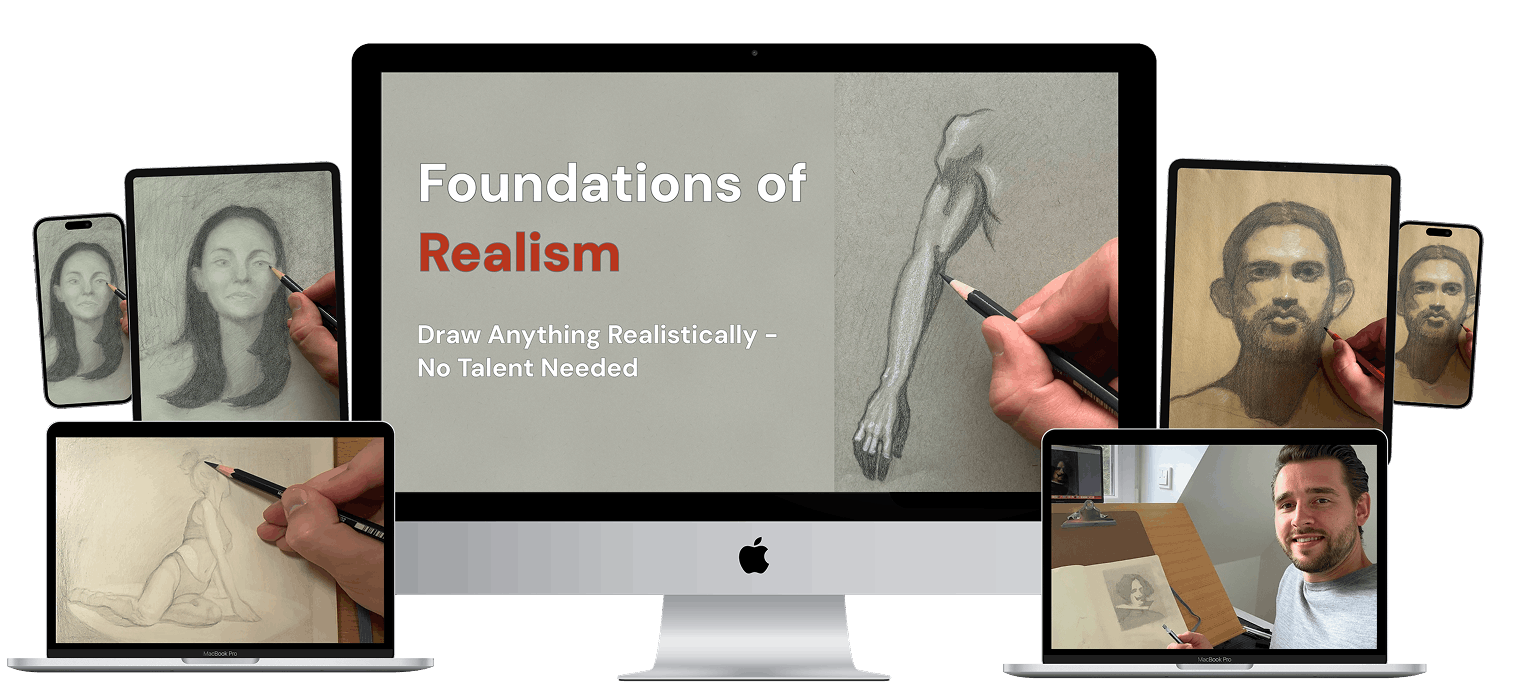
Once you can diagnose a drawing, everything gets easier
You stop guessing. You look at any drawing, yours or a master's, and know which skill is doing the work and which one is missing.
You get results in 10-20 minutes. You know what to practice, so short sessions are enough.
You stop hitting the wall. The plateau-and-burnout cycle comes from not knowing what to work on. You improve session by session.
You can draw anything. Portraits, figures, landscapes. One skillset, applied everywhere.
You find your own style. Once you control the foundations, your taste starts showing up in your work. That's when drawing stops being copying and starts being art.
Every other resource finally makes sense. Any book, YouTuber or course slots into the framework instead of feeling like contradictory advice.
Your First 14 Days
Foundations of Realism is a self-paced video course. You get lifetime access. Below shows a typical student’s progression.
Get Instant Access Today!
Foundations of Realism
- 10 hours of high-quality video instruction:
- ✓ Module 1: Materials — pick the right tools for the job
- ✓ Module 2: Linear Mark Making — draw confident, clean lines instead of shaky, uncertain ones
- ✓ Module 3: Tonal Mark Making — Learn 3 techniques that instantly level up your shading
- ✓ Module 4: Accuracy & Design — get a likeness with an intuitive and fun approach
- ✓ Module 5: Gesture — infuse your drawings with life and energy
- ✓ Module 6: Value & Edges — create atmosphere and depth in your drawings
- ✓ Module 7: Form — make anything you draw look like it comes off the page
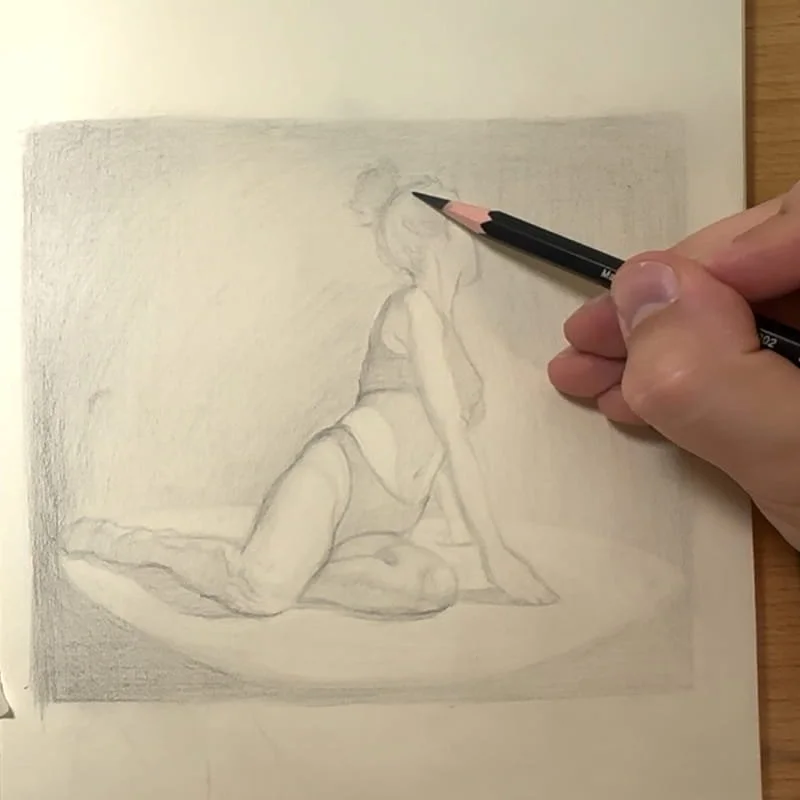
- ⭐ Bonus #1: Figure Drawing Demo
- ⭐ Bonus #2: Portrait Drawing Demo
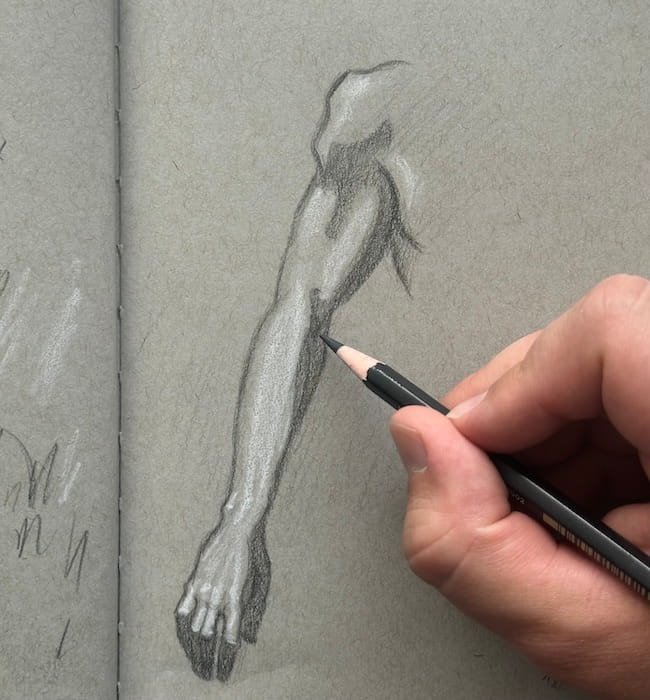
- ⭐ Bonus #3: Rendering With Black & White Pencil On Toned Paper Demo
- ⭐ Bonus #4: Self-Study Resource Guide
- ⭐ Bonus #5: Reference Guide & Master Reference Vault
- 📚 All Exercises & Workbooks
- ♾️ Lifetime Access to All Updates


What Students Are Saying.
Loved it! It was really thought out and taught so much I didn't know. It has helped immensely on my realism art.
It was great, because it was the whole package, not only some small part of all the skills necessary. Great resource for beginners, or people who have tried painting/drawing but are lost on how to get better.
This course is very inspiring because it offers progressive, step-by-step instruction. It is easy for beginners and also challenging for intermediate artists. I actually got better and improved my portrait and figure drawing skills by taking this course. Thanks a million!
My student Jenn saw a marked improvement in her drawing in just a few days after years of getting stuck!
I've dabbled in traditional and digital art off and on since I was a kid. I've always had trouble with getting proportions right and adding value. Actually, I had a lot of trouble getting particularly good at any part of art. I would progress to a point, and it's like I couldn't see what was wrong with my drawing.
This course has it all — from the barebones basics to advanced lessons, and even tips on how to make progress after the course. There is a nice progression through the lessons. It's not like, "Okay, yesterday I drew a cube... How'd we get to drawing full figures?!" He has a nice pace about each lesson and describes what he's doing in detail.
I was already quite familiar with drawing implements (pencils, charcoal, etc.) and the different types of paper, but I learned even more about them, and why some techniques work with some mediums but not others. He teaches the why and the how behind the methods.
Even within a few days, I had a marked improvement in my drawing. You can tell Felix has put a lot of thought, time, and dedication into this course, and he puts the same amount of dedication into the students. He seems to really enjoy seeing your progress and gives tips and advice in a thoughtful way.

Do you dream of...
...drawing anything you see with realism, design and beauty?
...filling sketchbooks with your original, expressive and realistic drawings?
...having a drawing skillset that gives you true freedom?
“Just observe” isn’t enough.
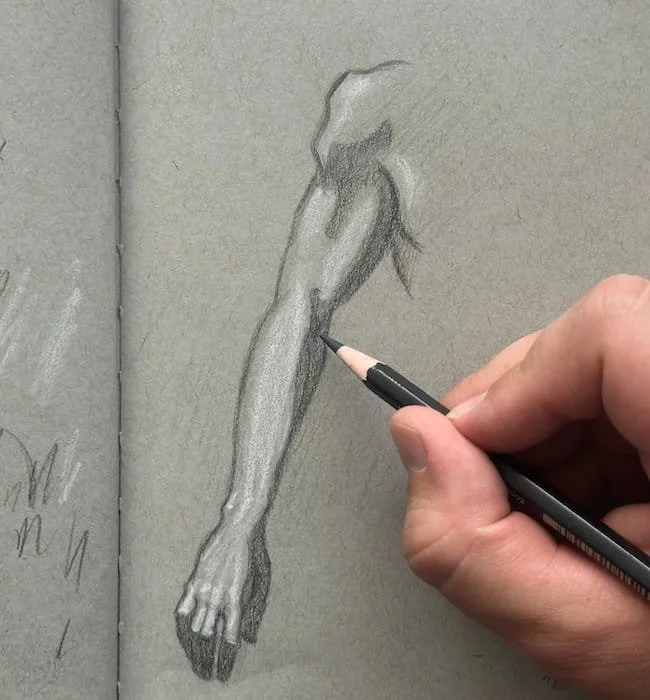
I once went to a French Academy in Paris for a life drawing class, and the only advice the teacher gave was: “Just observe.”
Strangely, a lot of drawing advice sounds like this:
“Just observe carefully.”
“Draw what you see.”
“Practice every day.”
And technically, none of that is wrong.
But imagine if we taught every other skill this way.
Imagine your first tennis lesson was: "Just watch the ball and hit it."
No grip, no footwork, no stance, no swing — that’s what most drawing instruction does.
But in reality…
…drawing feels confusing, hard and like a magical skill only some are born with?
…you get stuck in the middle of a drawing and don’t know how to proceed?
…one day your draw great, the next day you draw badly?
You don’t accept lazy instruction like this in any other part of your life, so why accept it in drawing?
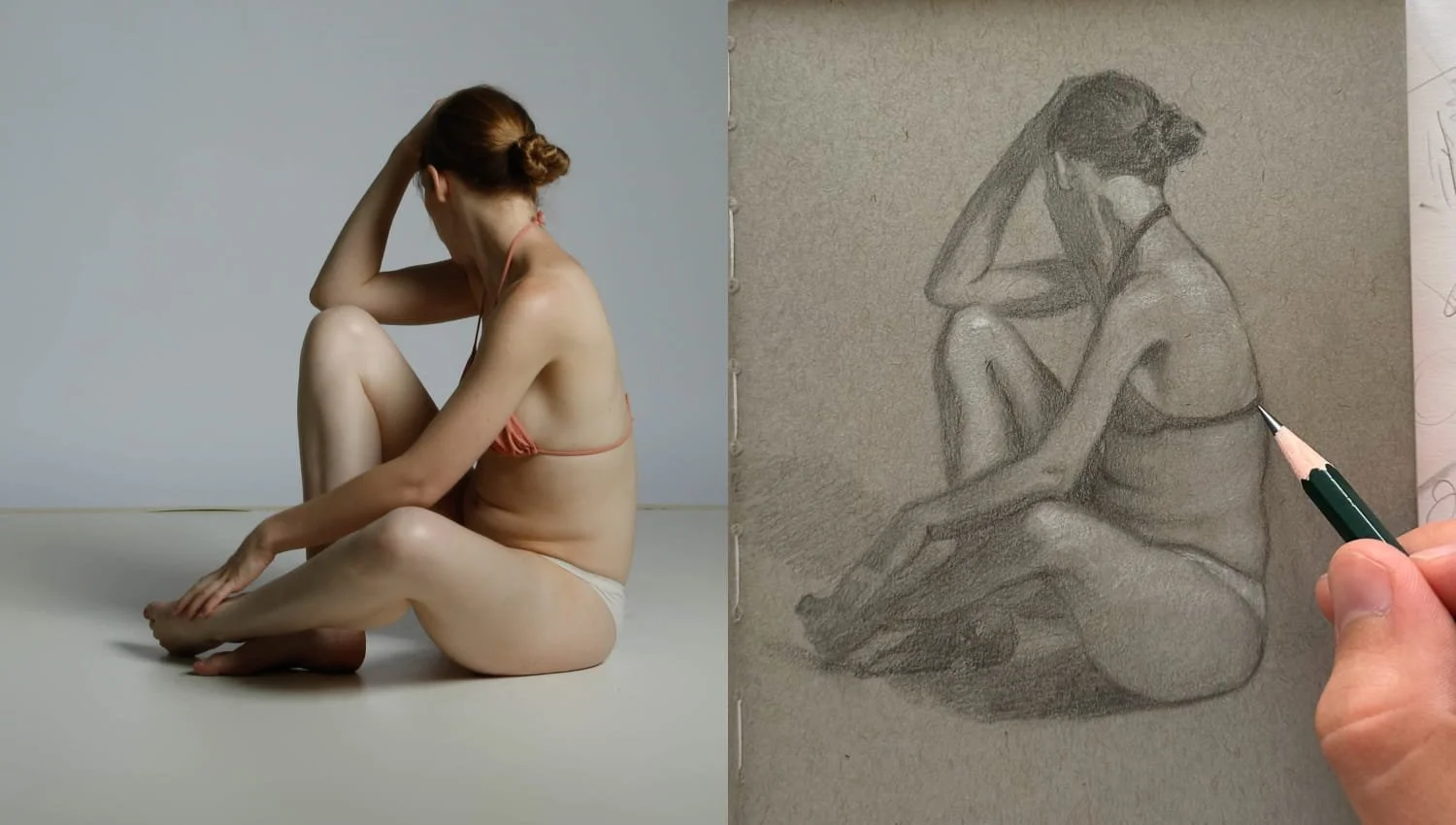
Drawing isn’t fundamentally different.
It’s a complex skill made up of smaller skills.
And if you don’t understand those smaller skills, “just observe and practice” means you will make you progress at a snails pace.
Compared to how fast you could learn drawing with the systematic approach taught in this course.

Hi I’m Felix,
and before I tell you how this course teaches drawing differently, I want to tell you my story.
I started drawing, maybe like you, as a kid. But I didn’t “get into it” until maybe 12 or 14. Something like that.
At that age I remember my mum showed me how to draw a little 3D cube. Somehow this cube made me realize I can draw in three dimensions and it intrigued me to learn realistic drawing.
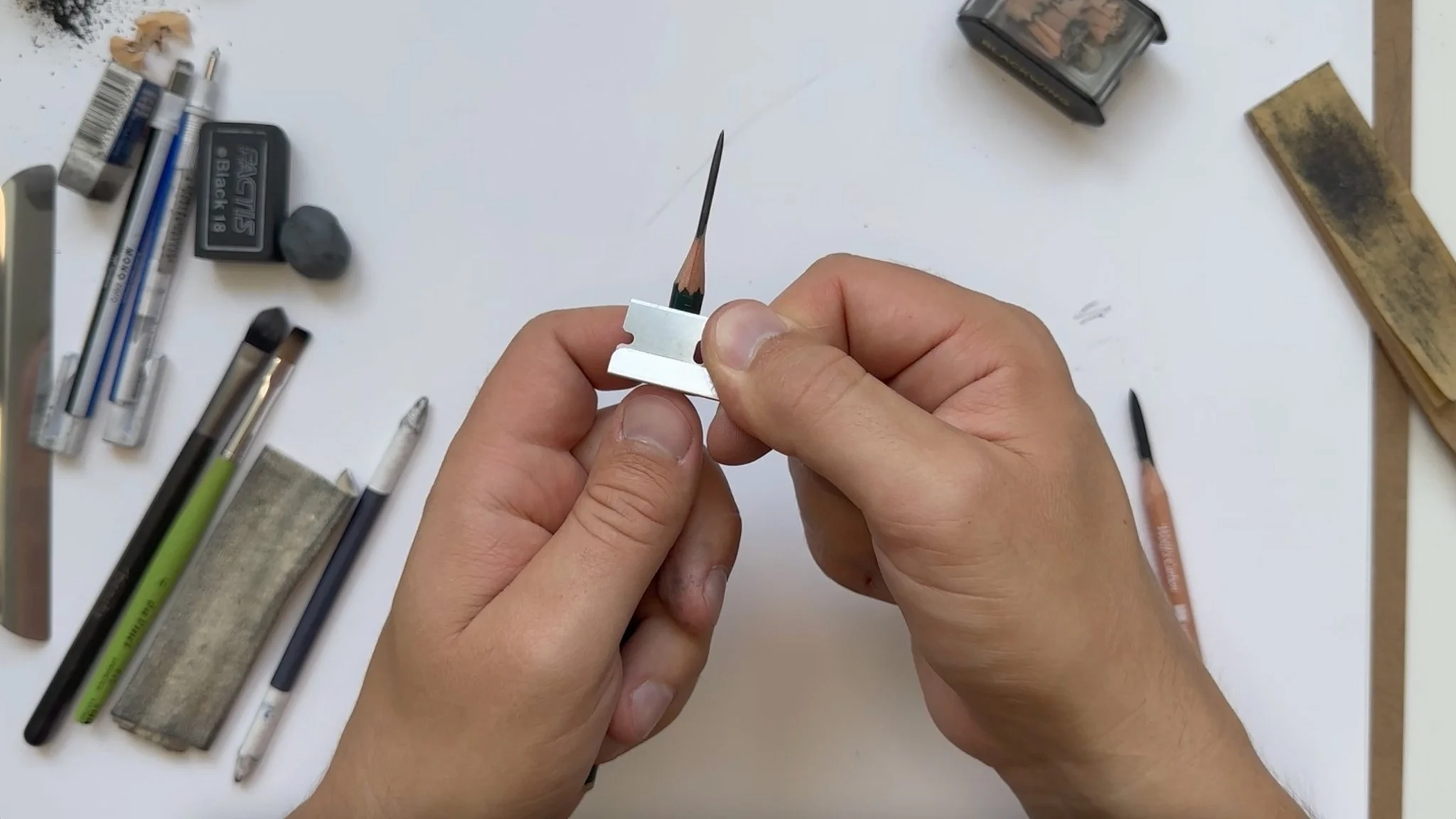
At the time the internet wasn’t that popular yet (I’m 32), so all I could find where a few subpar drawing books. I’d copy some stuff, and basically have zero idea what I was doing.
One day I stumbled across a book called “Drawing on the Right Side of the Brain", by Betty Edwards.
This book was both a game changer, and at the same time resulted in my biggest drawing plateau ever…
It taught me the famous “Just observe” approach. Observe lines, observe angles, observe values. And match them.
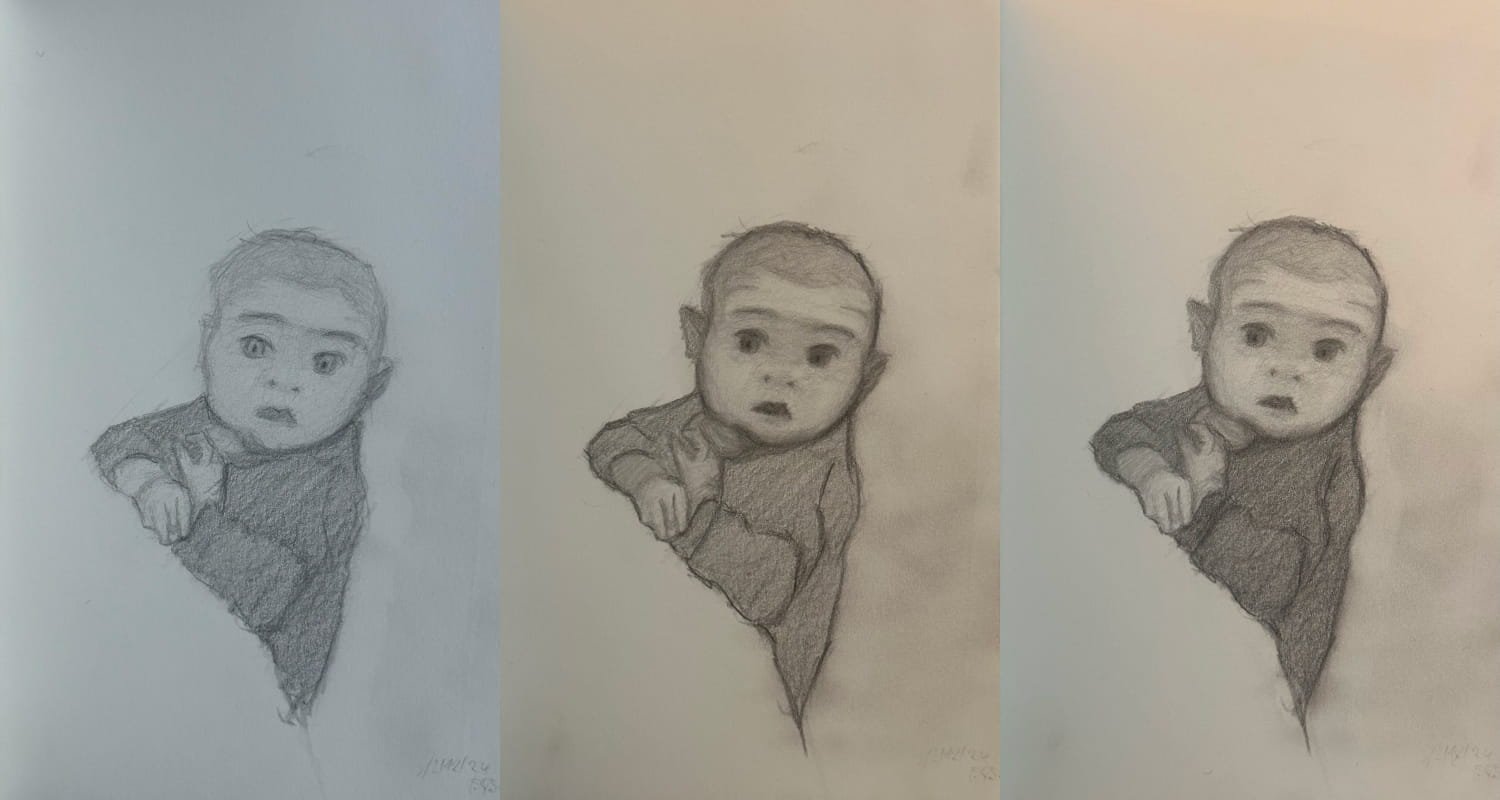
I loved training my “vision” with that approach, and for the first time I managed to draw a super realistic figure drawing and portrait. I literally just meticulously copied the reference, erased anything that was wrong, step by step. It took hours, but it worked.
I was so satisfied after finally having achieved the realistic drawing I always wanted to do. “Now I’m skilled.” - I thought.
But then an emptiness started to replace the satisfaction I had felt.
Doubts started to creep into my head:
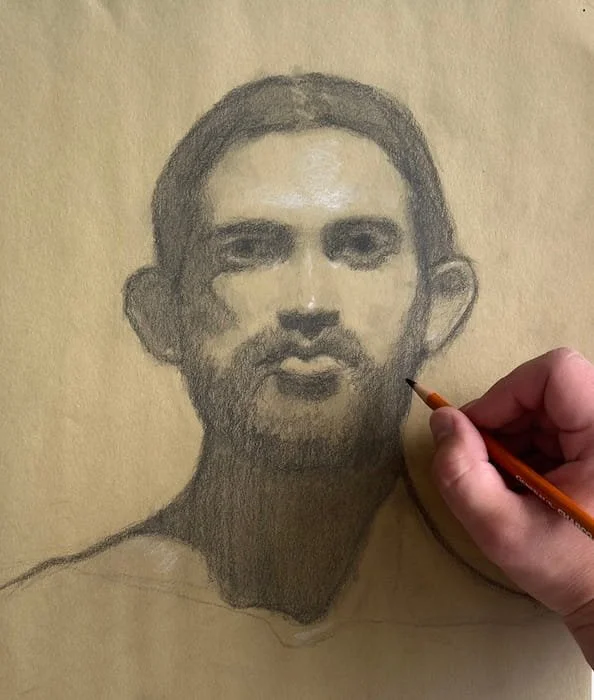
“If drawing is simply copying what you see, meticulously, correcting anything wrong… then isn’t that like the most boring, unnecessary thing to do in the whole world?!”
Yes the drawing looked fine… but the process was boring. I literally just copied.
After that experience I gave up on drawing for many years. Here and there I’d play a bit with it.
But I always felt like “I know what drawing is and it’s boring. It’s not as exciting as I hoped it to be”.
What a shame, as I was completely unaware of a whole world of drawing instruction that makes drawing the exact opposite of boring.
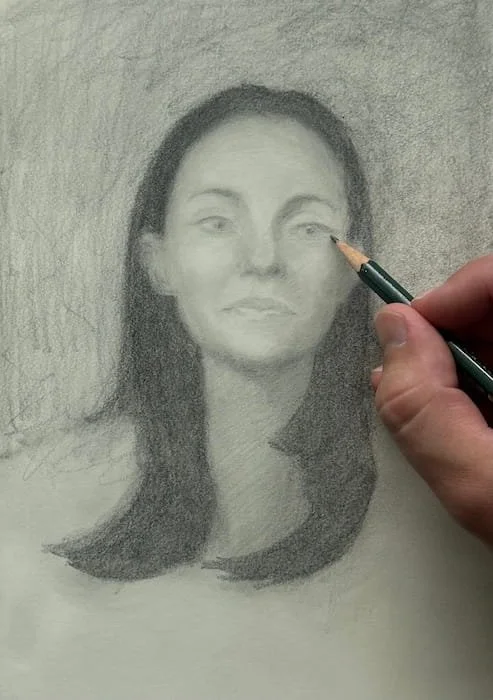
In my late twenties, somehow I found a guy called “Chris Legaspi.” You might know him as I offer some of his courses on this site.
He introduced me to concepts in drawing I had NEVER heard of:
Mark making
Master studies
Shape Design
Composition
Shading techniques
Planes
Constructions
Gesture
Layering
and many, many more.
Each concept was like discovering a fundamental part of the visual world I had been completely unaware of.
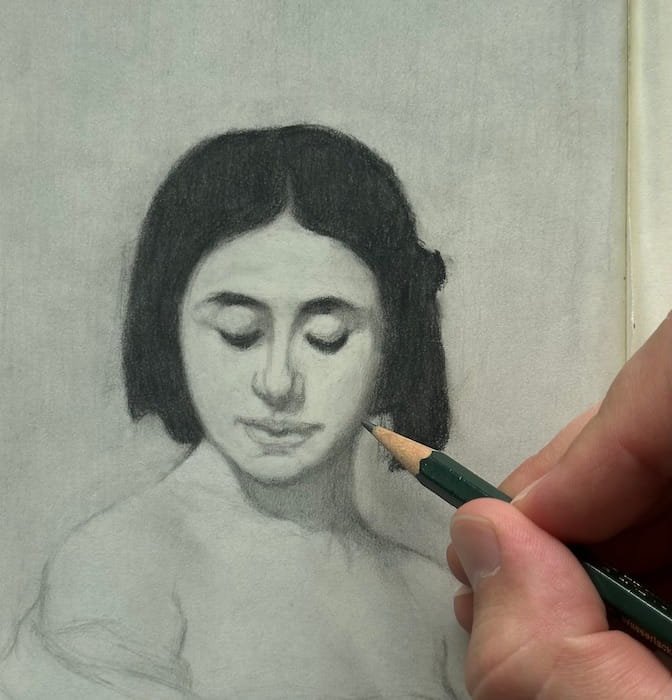
Yes observing, training your vision and measuring is one of those skills, so Betty Edwards did teach something valuable.
But it’s maybe 5% of all drawing concepts you need (if I had to put a number on it).
Suddenly I realized:
Drawing is not different to any other skill. To get great, you need to break it down into it’s components, build a foundation, fix your weaknesses, and work on every part of your game.
Which is what you do in any other endeavour like sports, music, you name it.
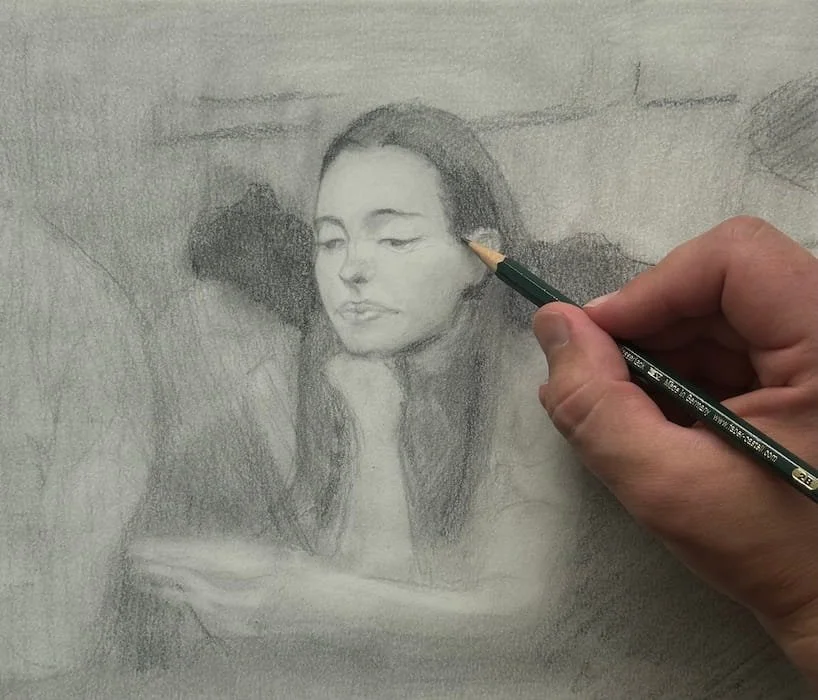
I couldn’t believe how I had wasted over a decade, when I could have gotten so much better at drawing. Thinking I had “figured it out” and it’s just a boring hobby.
More than that: All those skills Chris taught me made me realize how FUN drawing becomes when you can freely manipulate those foundational skills to get visual effects that illicit specific emotions.
The ability to control and manipulate the foundational drawing skills to get specific visual effects is called DESIGN.
And Design is FUN!
Once you can draw with Realism using the foundations, the FUN of drawing and the ART in it, comes when you can consciously control the visual variables to create the pictures you imagine. As a designer. And a picture maker.